Exploring Future Scenarios Through a Gamified Workshop
User Research
Service Design
Workshop
AI Generated content
My role
UX and Service Designer
I designed the initial workshop concept and led its execution with prospective clients.
Timeline
2025
Team
Perfect Store
Business, Design
Outcome
A gamification template for co-design workshops
This template originated as a custom activity for a client and was later adapted into a reusable format.
In collaboration with the business team, I designed a gamified tool used in a workshop with clients from the retail sector.
The workshop was exploratory in nature and aimed at co-designing the future of key retail roles, including category managers, account managers, and sales representatives. Participants explored future scenarios using cards and interactive elements from a custom-designed board game.
This format proved particularly effective with clients who were less familiar with design thinking activities.
The gamified approach helped them quickly engage with the process and actively participate, something that can often be challenging in more traditional workshop settings.
All visuals were created using ChatGPT and Midjourney.
Heuristic Evaluation: spotting usability issues
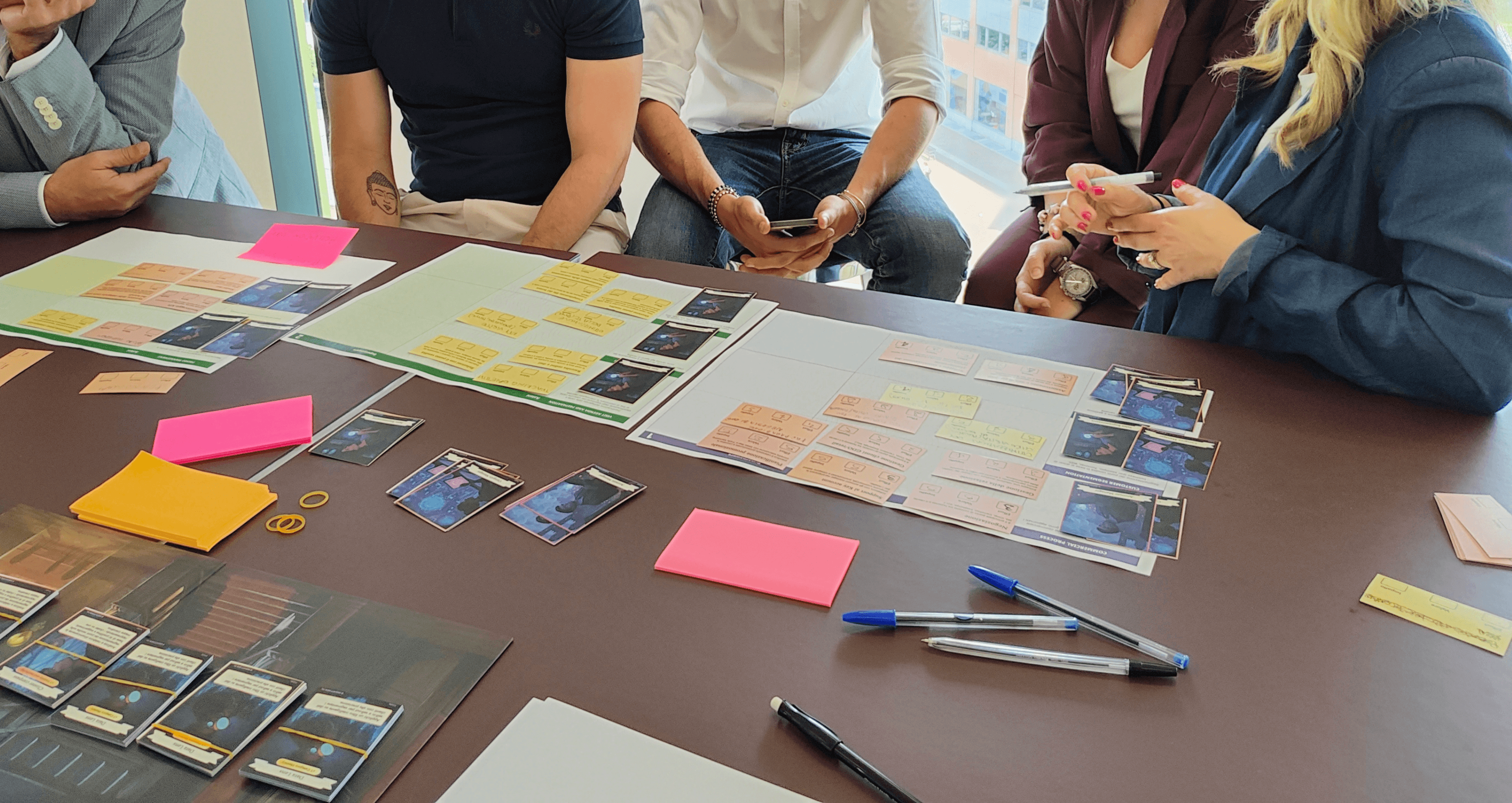
An image of the tool in use
Gaming: a way to engage with participants
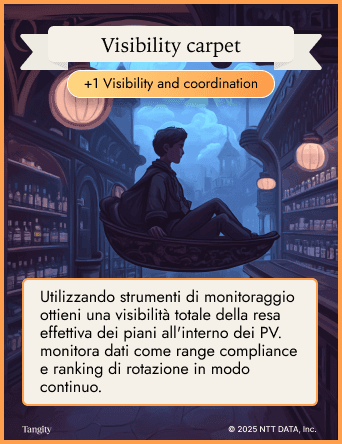
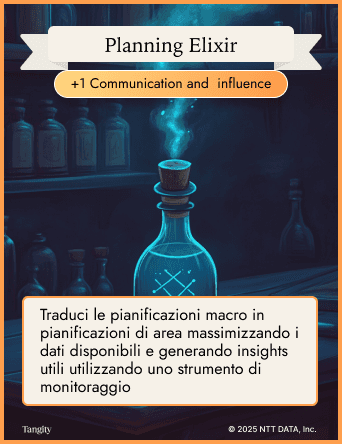
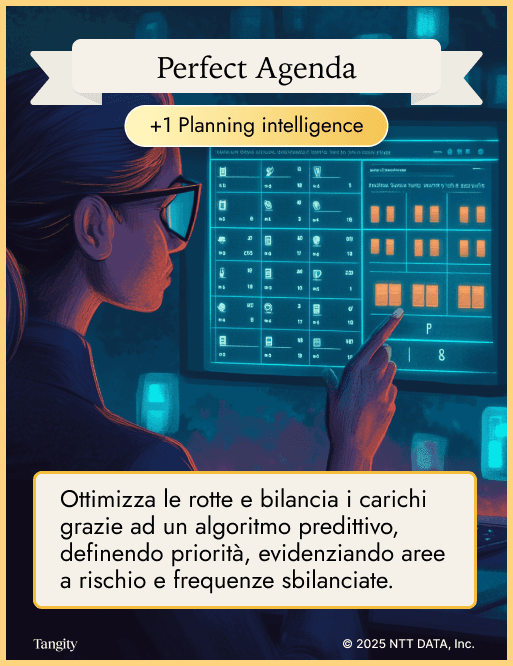
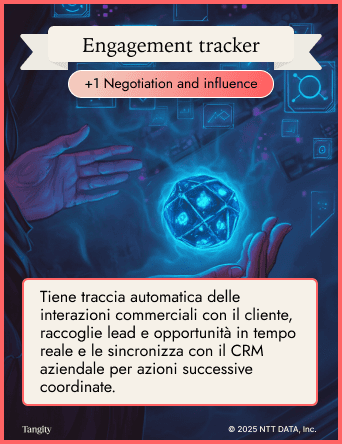
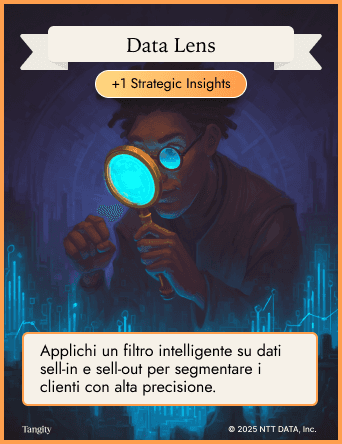
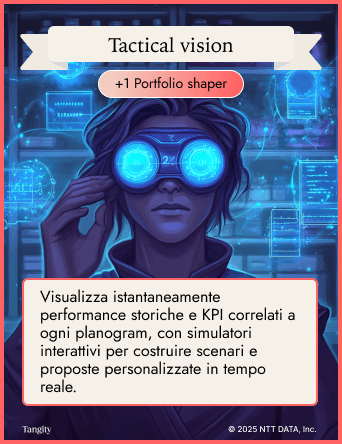
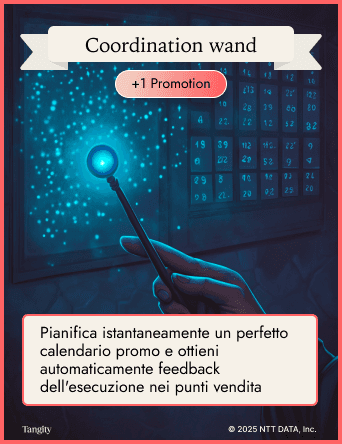
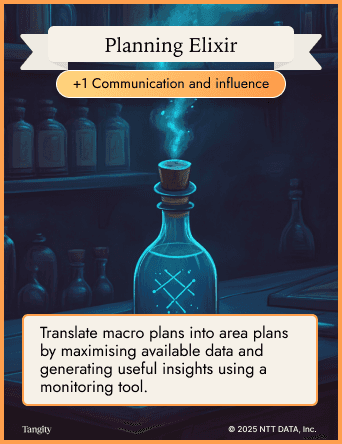
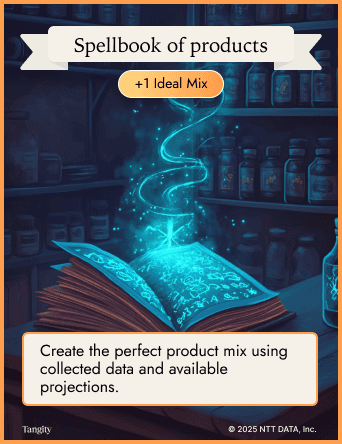
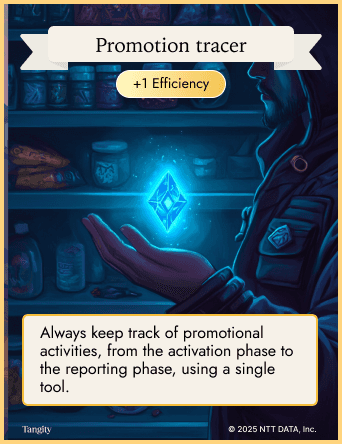
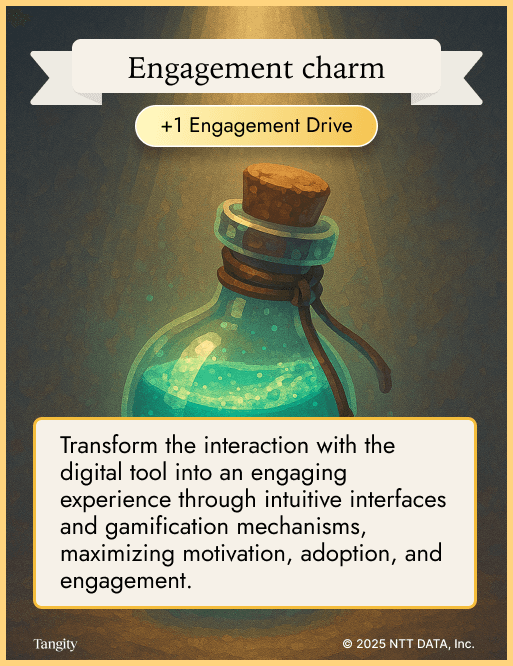
To increase engagement, often a challenge in this type of workshop, we introduced a gamified approach. The core element was a deck of cards, each representing a “power” that participants could assign to roles and use as a power-up during the session
The cards were inspired by the language of fantasy and board games, a familiar and accessible reference across different ages and backgrounds. We combined elements typical of retail roles with imaginative, magical features, creating a playful yet meaningful experience.
Examples of these cards include Planning Elixir, Spellbook of products, as shown below.
A lots of visuals, very little time
Producing such a broad set of visuals for a workshop might initially seem excessive. However, the use of AI made this approach both feasible and intentional, allowing me to explore ideas, iterate rapidly, and generate a wide range of assets within a limited timeframe.
I used Midjourney to generate the visual outputs and ChatGPT to refine and iterate on prompts, enabling a fast, flexible, and highly experimental creative process.
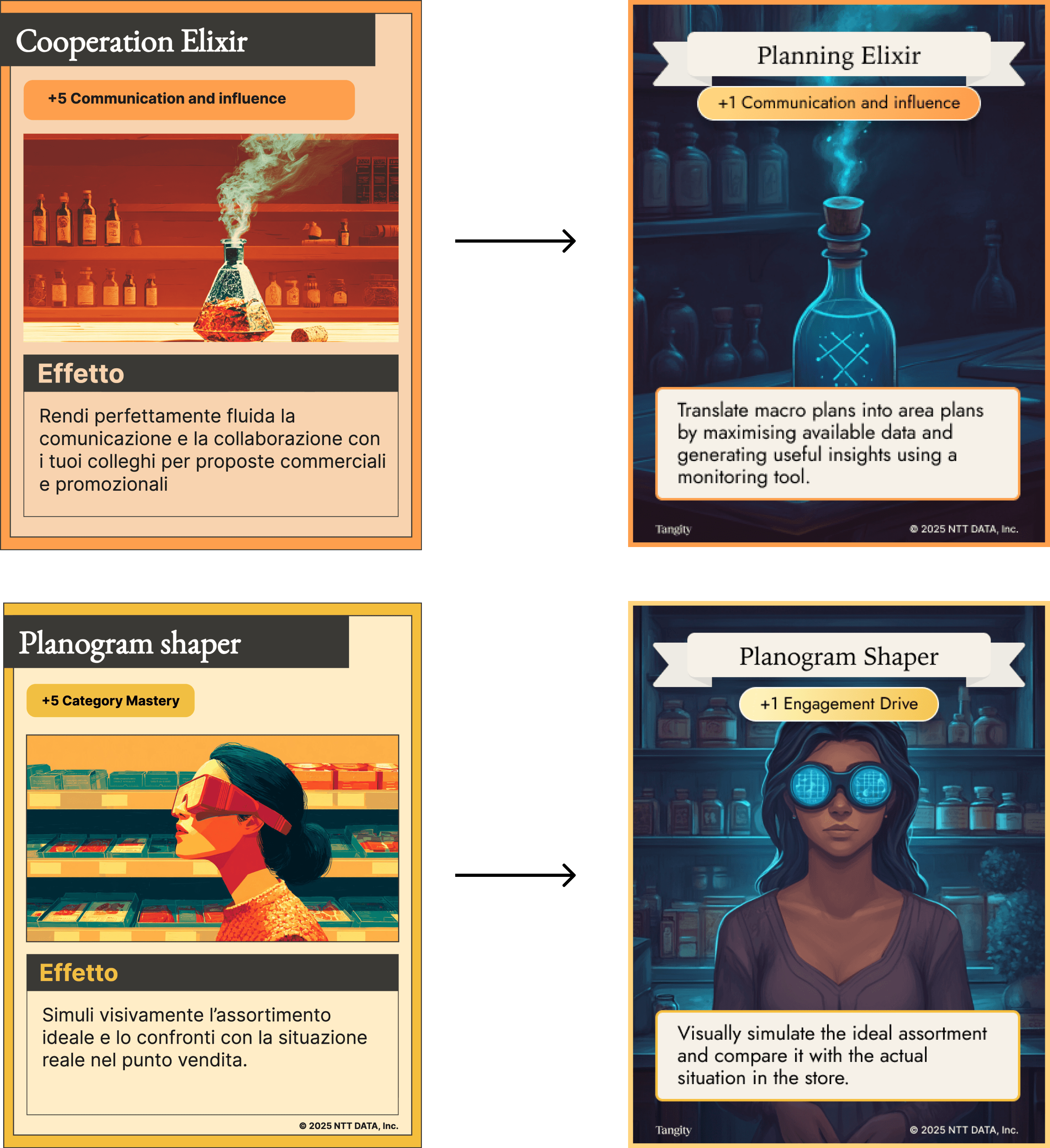

BRAINSTORMING
I used ChatGPT to brainstorm on possible visuals to use and which object to show.
PROMPT DEFINITION
I used ChatGPT to support me in writing prompts to create these cards.

VISUALS RESEARCH
I used Midjourney to find possible styles and make some explorative Designs.
VISUALS ITERATIONS
I iterated visuals, trying to keep a cohesive style among all cards.
Mapping the AS IS
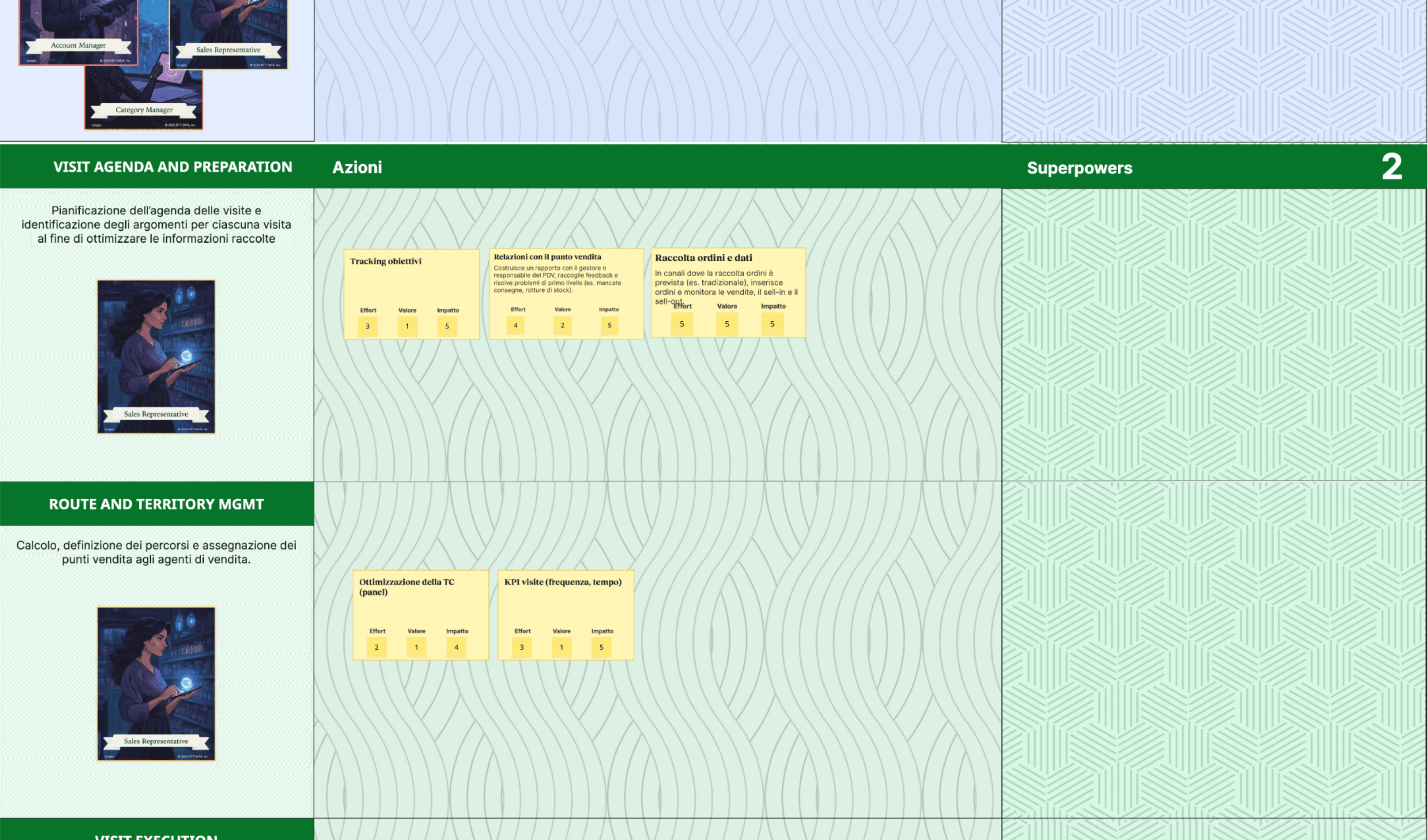
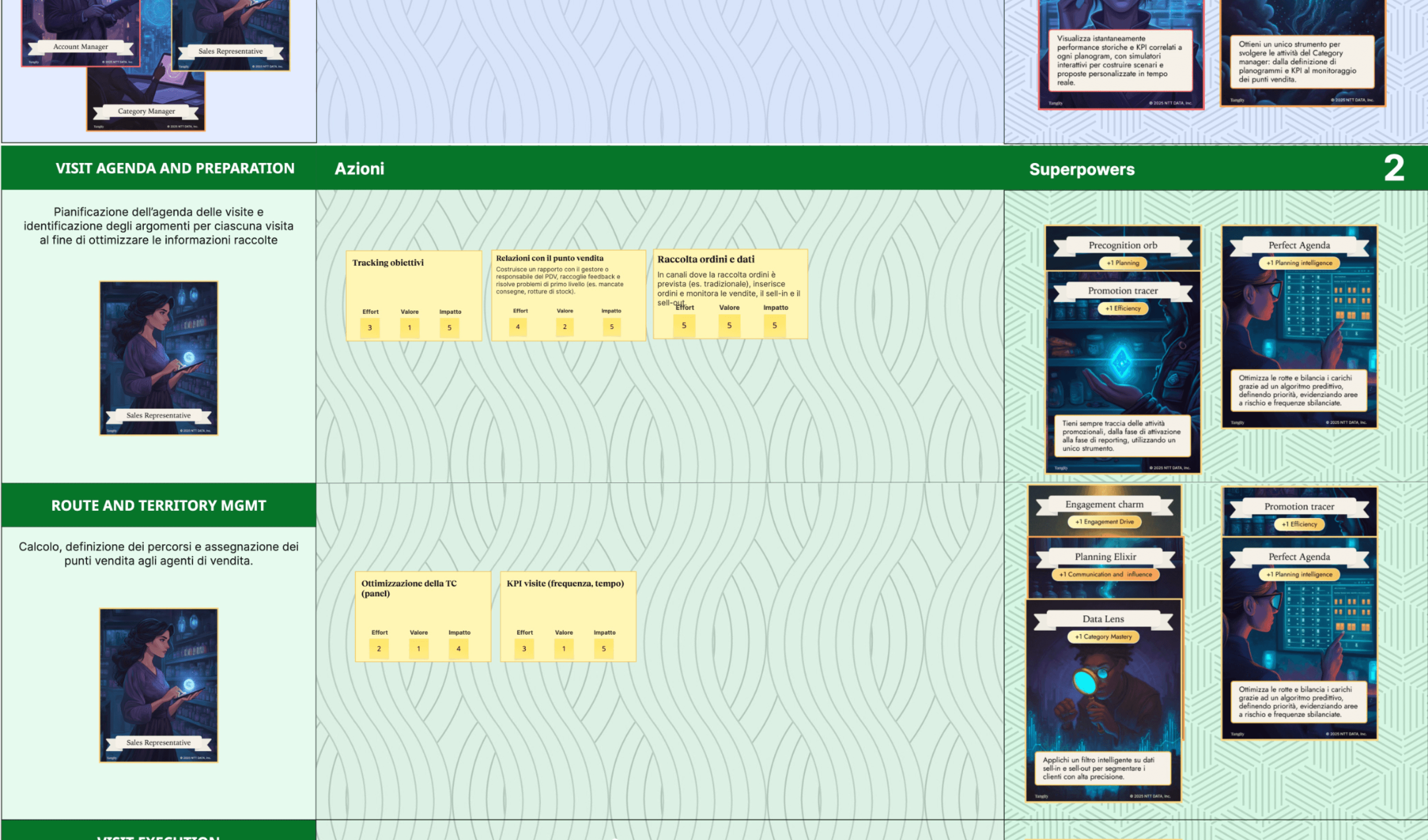
To map the AS‑IS, we used a three‑column journey map. The first column represented the journey phases, where participants were asked to place role cards. The remaining columns focused on actions to be evaluated in terms of effort, impact, and value.
This high‑level mapping exercise allowed us to initiate a discussion around which activities were the most critical and how they impacted each role involved.
Exploring future scenarios
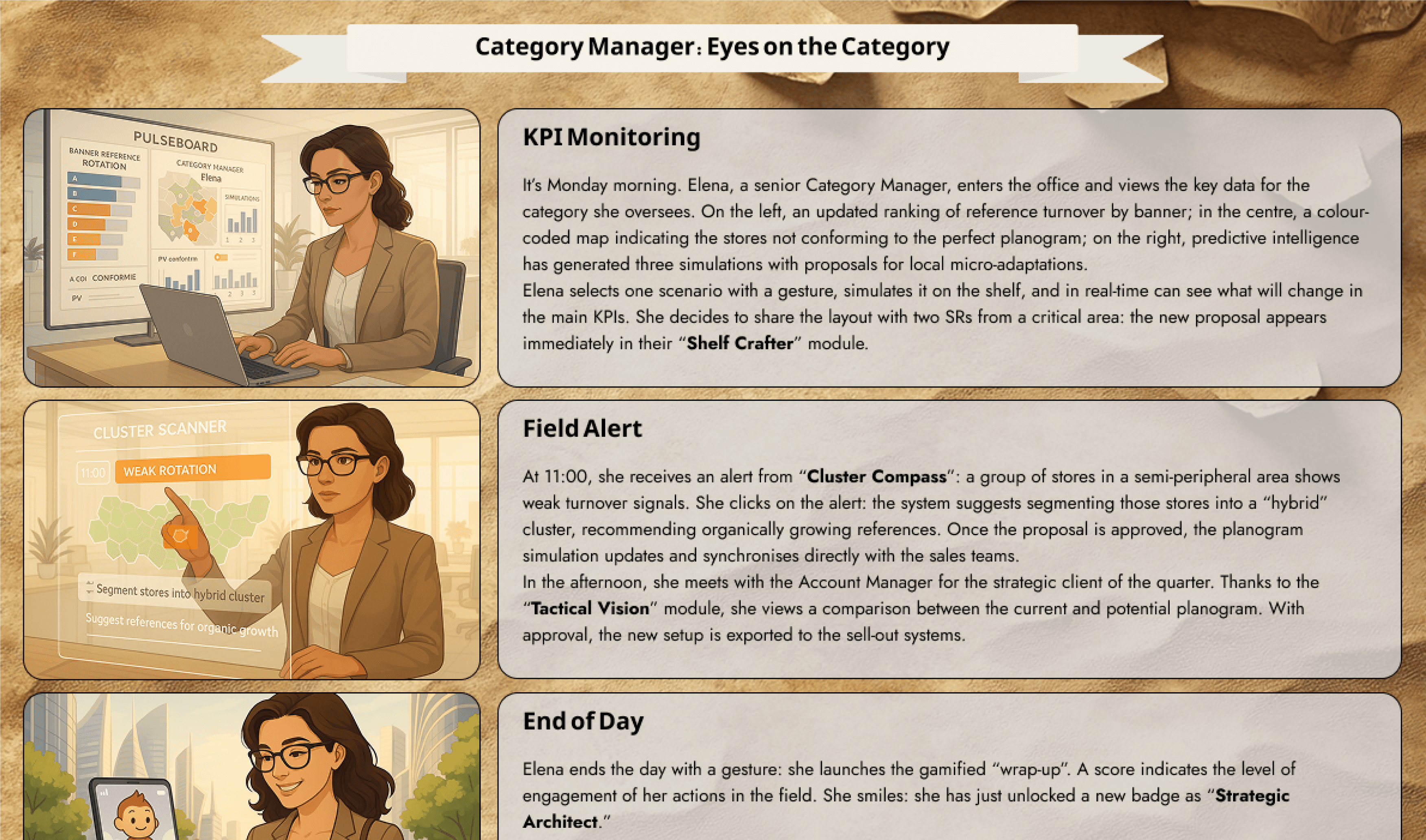
Before starting with the mapping of the TO BE, participants were shown a number of scenarios explaining how a professional day of their life could look like in the future. We imagined how technology could support them in their daily activities, making some time consuming like store visits activities hassle free.
Mapping the TO BE
Before starting with the mapping of the TO BE, participants were shown a number of scenarios explaining how a professional day of their life could look like in the future. We imagined how technology could support them in their daily activities, making some time consuming like store visits activities hassle free.
Prioritizing the superpowers
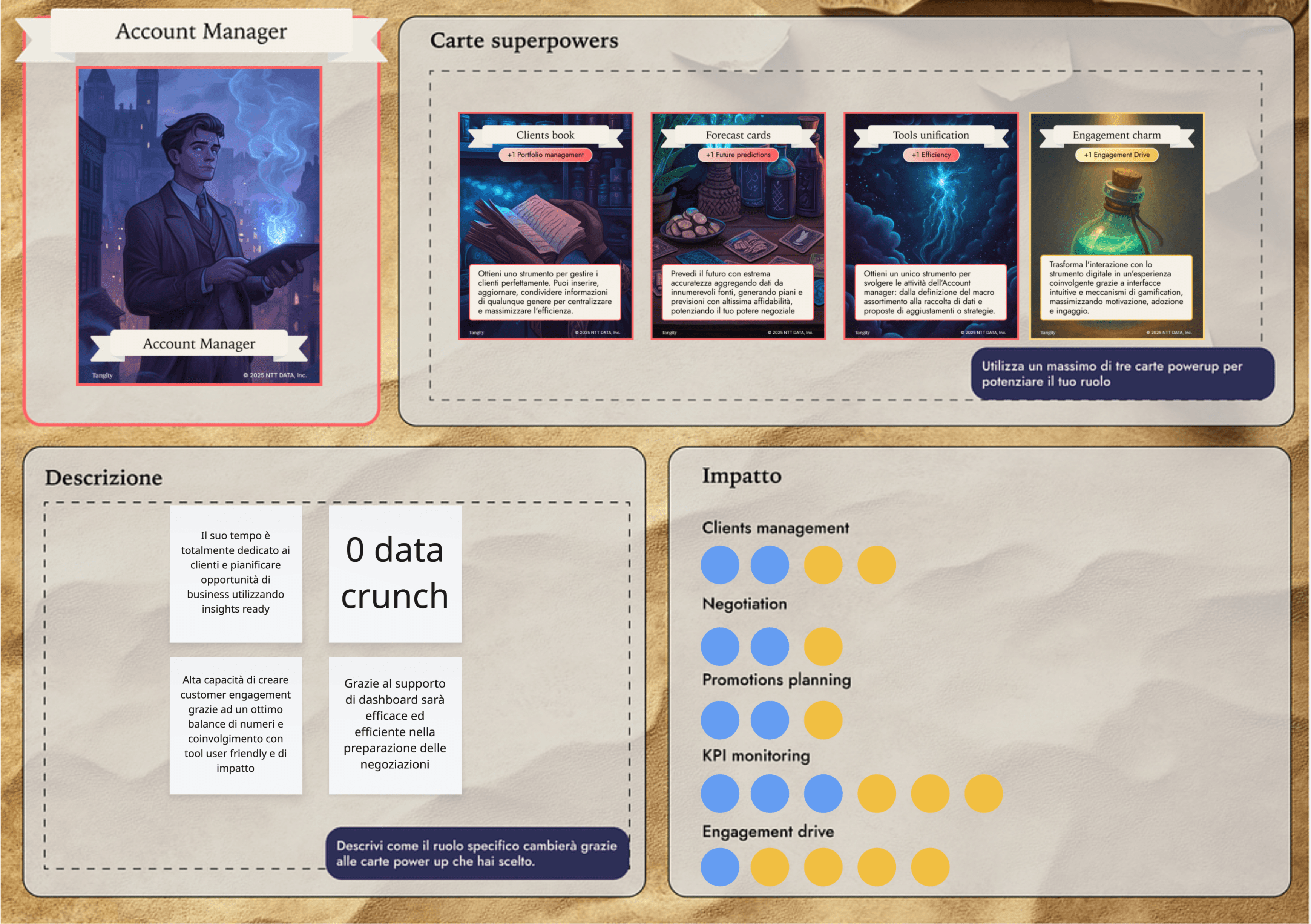
Participants were then asked to select up to four Power‑Up cards and place them onto a separate template. This activity served as a wrap‑up at the end of the workshop and as a way to estimate the impact of each Power‑Up across a set of predefined metrics, as shown below.
Participants were divided into three groups based on their professional roles. At the end of the exercise, each group presented their outcomes to the other participants, enabling cross‑role comparison and discussion.